A Regular X-Ray Shows Two Dimensions. Your Mouth Has Three.
If you have had dental X-rays before, you may be surprised when your dentist recommends a 3D scan. It is a fair question: why do you need another image?
A standard dental X-ray works like a shadow. It flattens everything in its path into a single picture, so structures that sit in front of or behind each other overlap. For checking cavities between teeth, that is usually all the detail we need. For planning surgery or tracking down a hidden problem, a flat image can miss what matters most. If you have questions about a 3D dental scan your dentist recommended, call Lexington Dental of Owasso at (918) 274-8500.
What Is a Cone Beam CT Scan?
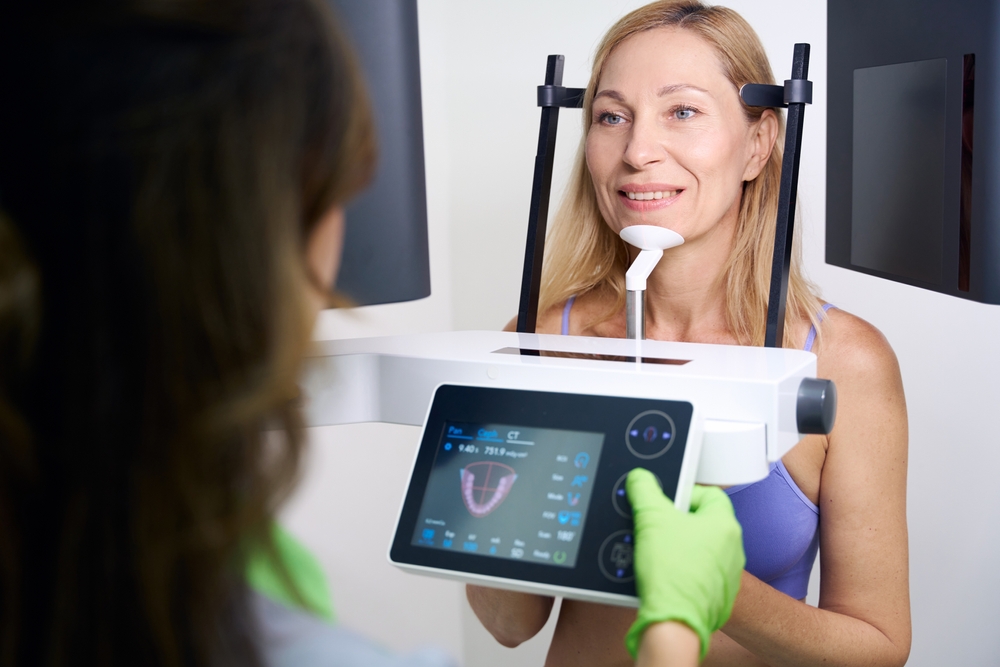
 Cone beam computed tomography, or CBCT, is a type of 3D dental imaging designed for the teeth, jaws, and face. The scanner rotates around your head once, taking hundreds of images in less than a minute. Software then assembles them into a three-dimensional model your dentist can view from any angle, slice by slice.
You sit or stand still while the scanner moves. There is no tunnel, no injection, and nothing goes in your mouth. Most patients are in and out of the scanner in a few minutes.
When a Regular X-Ray Is Enough
For most routine dental care, standard digital X-rays give your dentist what they need. These include:
- Checking for cavities between teeth
- Monitoring bone levels at routine checkups
- Planning most fillings and crowns
- Checking the general position of teeth and roots
If your dentist recommends a 3D scan, it is because a flat image can’t answer a specific question.
When Your Dentist Will Recommend a 3D Scan
These are the most common reasons a dentist recommends a cone beam scan instead of, or in addition to, a regular X-ray.
Planning Dental Implants
An implant needs enough bone in every direction, not just height. A 3D scan shows the width and density of your jawbone and the exact location of the nerve in the lower jaw and the sinus above the upper teeth. Dr. Jacob Cary, who completed a surgical fellowship in implant dentistry through the Misch Resnik Implant Institute, uses this information to choose the right implant size and plan its angle before surgery. Learn more about dental implants at Lexington Dental of Owasso.
 Removing Wisdom Teeth
Lower wisdom teeth often sit close to the nerve that supplies feeling to your lip and chin. On a standard X-ray, the tooth and nerve can overlap even when they are separate, or look separate when they are touching. A 3D scan shows the true relationship, which helps your dentist plan a safer wisdom tooth removal.
Complex or Unhealed Root Canals
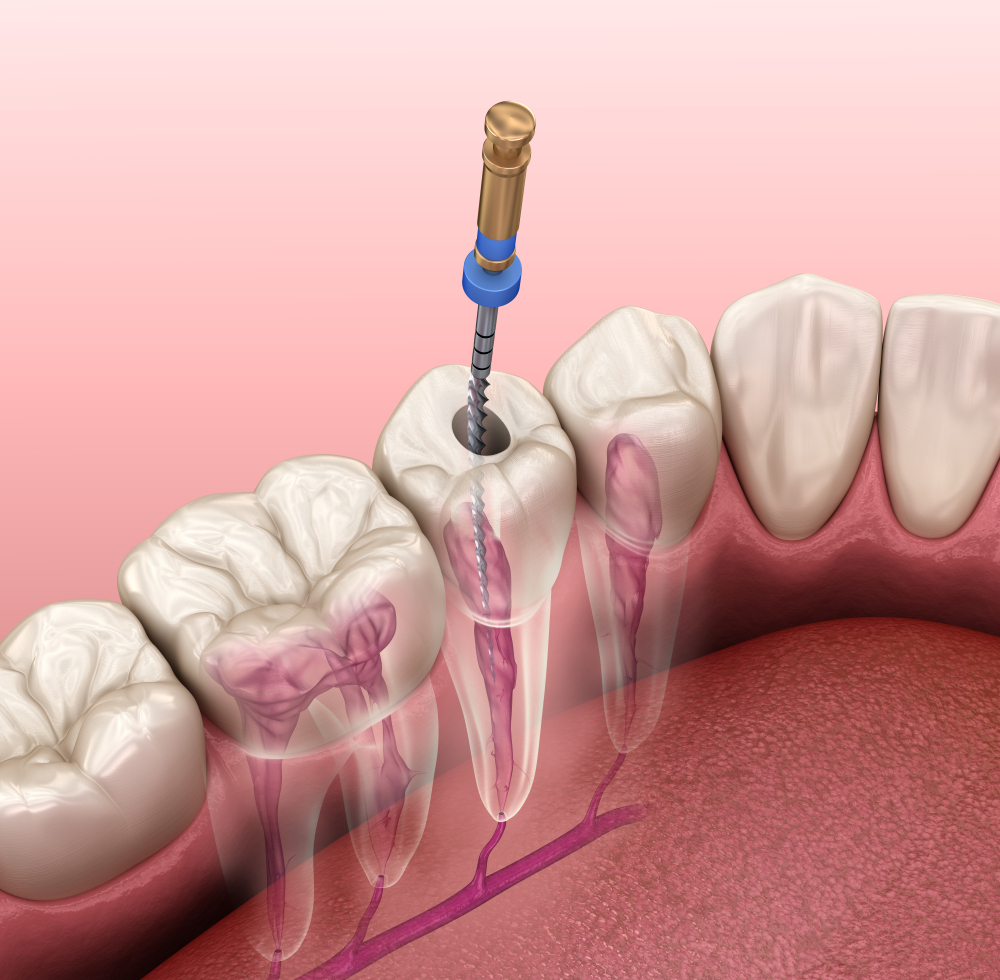
Some teeth have extra or curved canals that don’t show clearly on a 2D image. A 3D scan can reveal a missed canal, a root crack, or an infection at the root tip that a flat X-ray hides behind other structures. This is especially useful when a tooth that had root canal therapy still hurts.
Jaw Joint Problems
For patients with jaw pain, clicking, or limited opening, a 3D scan can show the bony structure of the jaw joint. It is one tool among several your dentist may use when evaluating TMJ treatment options. If you are not sure whether your symptoms point to the jaw joint, read our post on jaw pain, headaches, and grinding.
Unexplained Pain, Swelling, or Findings
When a patient’s symptoms don’t match standard X-rays, or an X-ray shows something unusual, a 3D scan can help identify problems such as cysts, impacted teeth, or bone changes.
Common Questions About 3D Dental Scans
Is a cone beam scan safe?
A cone beam scan uses more radiation than a set of regular dental X-rays but considerably less than a conventional medical CT scan of the head. The FDA and the American Dental Association both advise taking dental X-rays, including cone beam scans, only when needed for diagnosis or treatment. That is why we recommend one when the information will change your treatment plan, not as a routine yearly image. Let your dentist know if you are pregnant or think you might be.
Will I need a 3D scan every year?
No. Most patients only need one when planning a specific treatment or investigating a specific problem. Your routine checkups continue to use standard X-rays.
Does insurance cover a 3D scan?
Coverage varies by plan. Some plans cover a cone beam scan when it is part of treatment such as implant placement or a complex root canal. Our team can check your benefits before your scan, and our financing options can help with any out-of-pocket cost.
3D Imaging at Lexington Dental of Owasso
We have a cone beam scanner in our office, so you do not need a referral to a separate imaging center. Dr. Cary can take the scan, review the images with you on screen, and explain exactly what he sees during the same visit. It is part of the dental technology we use to give patients in Owasso, Tulsa, Claremore, and Bixby clearer answers with fewer appointments.
Learn more about 3D imaging at our Owasso dental office, or call (918) 274-8500 to schedule a visit.