Most Root Canals Last, But Not All of Them Do
A root canal is one of the most reliable ways to save a damaged tooth. Most treated teeth last for many years, and studies commonly report success rates around 90 percent. Still, a small share of root canals fail, sometimes months after treatment and sometimes years later.
If a tooth that already had a root canal starts bothering you again, it doesn’t automatically mean you’ve lost the tooth. In many cases, you can treat a failed root canal and save the tooth. Here is what causes root canal failure, how to recognize the symptoms, and your treatment options. If your treated tooth is sore right now, call Lexington Dental of Owasso at (918) 274-8500 so Dr. Jacob Cary can take a look.
Chances of Root Canal Failure
 The odds are strongly in your favor. In one of the largest studies of root canal outcomes, published in the peer-reviewed Journal of Endodontics, researchers followed 1,462,936 teeth treated in 1,126,288 patients across all 50 states for eight years. At the end of the study, 97 percent of those teeth were still in place.
Only three percent needed further treatment, and most problems appeared within the first three years. Of the teeth extracted, 85 percent had never received a full crown after the root canal. That’s another reason to get your final crown placed promptly.
Why a Root Canal Can Fail
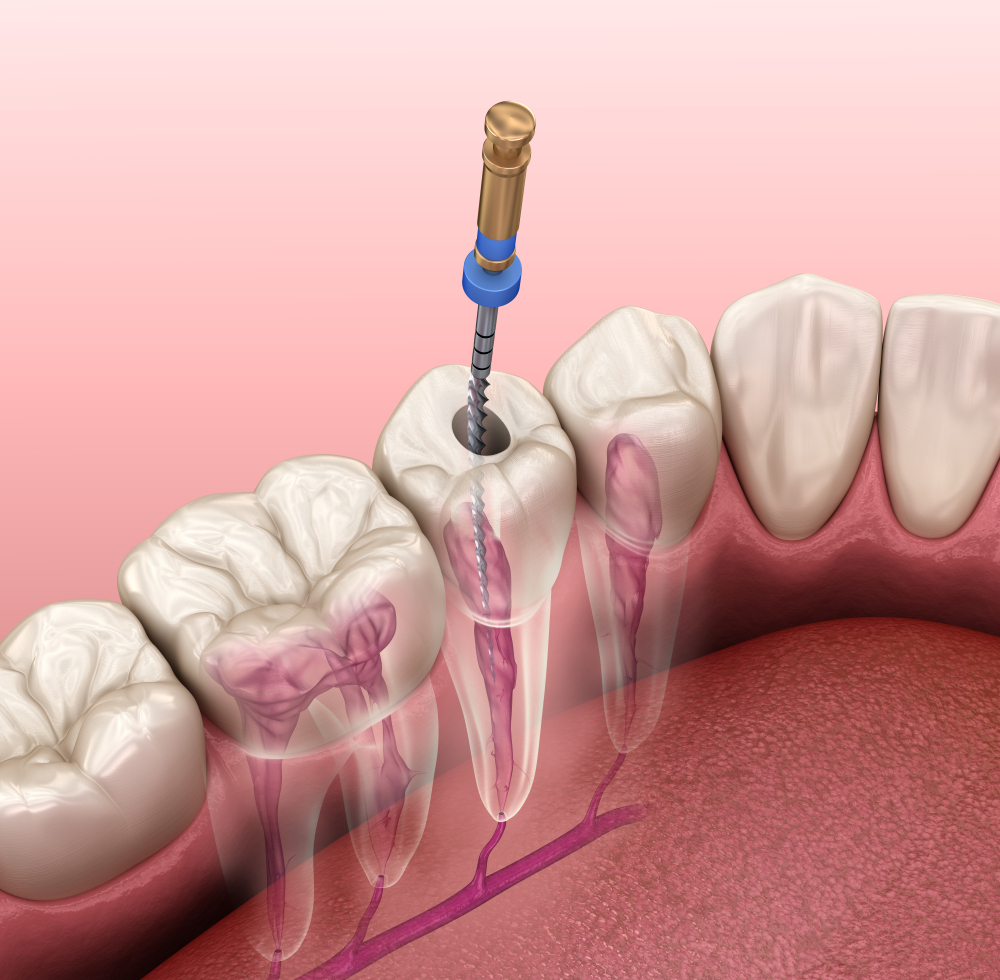
During root canal therapy, your dentist removes infected or inflamed pulp from inside the tooth, cleans and shapes the canals, and seals them. Failure usually means bacteria have found their way back in. The American Association of Endodontists notes that a treated tooth can develop new problems months or even years after treatment. Common reasons include:
- Hidden or Extra Canals: Molars in particular can have small, curved, or branching canals that are hard to find. If you miss one, bacteria left behind can cause a new infection.
- A Delay in Getting the Crown: Back teeth usually need a dental crown after a root canal. A temporary filling can leak, and waiting too long can let bacteria back into the tooth.
- New Decay: The tooth can still develop a cavity around the edges of a filling or crown, letting bacteria reach the sealed canals.
- A Crack in the Tooth or Root: A treated tooth can become brittle. A crack lets bacteria in and is sometimes hard to see without 3D imaging.
- Complex Anatomy: Narrow, calcified, or sharply curved canals can be difficult to clean completely.
Signs Your Root Canal May Be Failing
Because the nerve has been removed, a root canal tooth usually will not react to hot or cold. Instead, watch for these signs of a failed root canal:
 Pain or tenderness when you bite down or chew on that tooth
- Swelling in the gum or face near the tooth
- A small pimple-like bump on the gum, which can be a dental fistula draining infection
- A bad taste or drainage near the tooth
- Darkening of the tooth
- A crown or filling that feels loose or broken
Some failing root canals cause no symptoms at all. They can show up as a dark spot at the tip of the root on a routine digital X-ray, which is why regular dental exams matter even for teeth that feel fine.
What’s Normal Healing, and How Do You Spot a Problem After a Root Canal?
Some tenderness for a few days after a root canal is normal, especially when chewing. It should steadily improve. If pain worsens, lasts more than a week or two, or returns months or years later after the tooth felt fine, call your dentist.
If root canal tooth pain flares up after hours, our guide to managing a toothache at night can help you stay comfortable until you can be seen.
How Your Dentist Confirms the Problem
Your dentist will examine the tooth, check how it responds to pressure, and look at the surrounding gums. A standard X-ray can show infection at the root tip, but some problems, like a missed canal or a crack, are hard to see on a flat image. In those cases, a cone beam 3D scan gives a clearer picture of what is happening inside the tooth and root.
Lexington Dental of Owasso has a cone beam scanner in the office, so you do not need a referral to a separate imaging center. Dr. Cary can take the scan and review the images with you on screen during the same visit.
Treatment Options for a Failed Root Canal
The right treatment depends on why the root canal failed and how much healthy tooth structure remains.
Root Canal Retreatment
In many cases, the first option is to redo the root canal with a retreatment. The dentist reopens the tooth, removes the old filling material, and cleans the canals again, including any that were missed. The tooth is then resealed and restored, usually with a new crown. Complex retreatment is sometimes referred to an endodontist, a root canal specialist.
Apicoectomy
If retreatment isn’t possible or doesn’t resolve the infection, an apicoectomy, a minor surgical procedure, may be recommended. The tip of the root is removed through a small gum opening and sealed. An endodontist typically performs this procedure.
Extraction and Replacement
When a tooth has a vertical root fracture or too little healthy structure left, saving it may not be realistic. In that case, the tooth is removed and replaced. A dental implant or bridge can restore the space so neighboring teeth don’t shift. Dr. Cary completed a surgical fellowship in implant dentistry at the Misch Resnik Implant Institute, and we provide dental implants as part of the restorative care we offer in our Owasso dental office.
How to Help Your Root Canal Last
 A few habits make a big difference in how long a treated tooth lasts:
- Get the Final Crown Placed Promptly: If scheduling is a concern, ask about same-day CEREC crowns, which we can complete in one visit. If cost is what is holding you back, our financing options can help.
- Protect Against Grinding: A treated tooth is more prone to cracking. If you clench or grind, a custom night guard can help. Not sure if you grind? Here are five signs you might be grinding your teeth.
- Keep Up With Checkups and X-Rays: Catch many problems before they cause pain.
- Brush and Floss Around Crowns and Fillings: New decay is one of the most preventable causes of root canal failure.
Think Your Root Canal Might Be Failing?
If a tooth that had a root canal is sore, swollen, or just feels different, do not wait for it to get worse. Most failed root canals are treatable, and catching the problem early gives you more options.
Learn more about root canal therapy at Lexington Dental of Owasso, or call (918) 274-8500 to schedule a visit with Dr. Cary. We welcome patients from Owasso, Tulsa, Claremore, and Bixby. If you have significant swelling or severe pain, visit our emergency dental care page.