


Brush Twice Daily
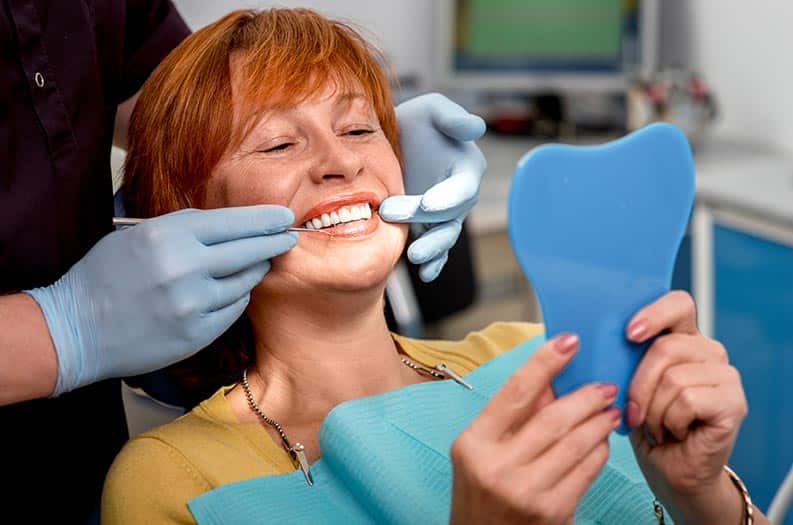
Brush your implant crowns and the surrounding gum tissue at least twice a day using a soft-bristle toothbrush. Soft bristles clean effectively without scratching the implant surface or irritating the gum margin. Electric toothbrushes with oscillating heads work well and make it easier to reach all surfaces. Use a non-abrasive toothpaste. Whitening toothpastes with harsh polishing agents can scratch the crown’s surface over time, dulling its finish.
Floss Every Day
Flossing around implants is where most patients slip up, but it’s one of the most important habits for long-term implant health. Plaque that builds up in the gap between the implant crown and the gum line can lead to peri-implant mucositis, which is the implant equivalent of gingivitis. Left untreated, it progresses to peri-implantitis, a more serious infection that damages the bone supporting the implant.
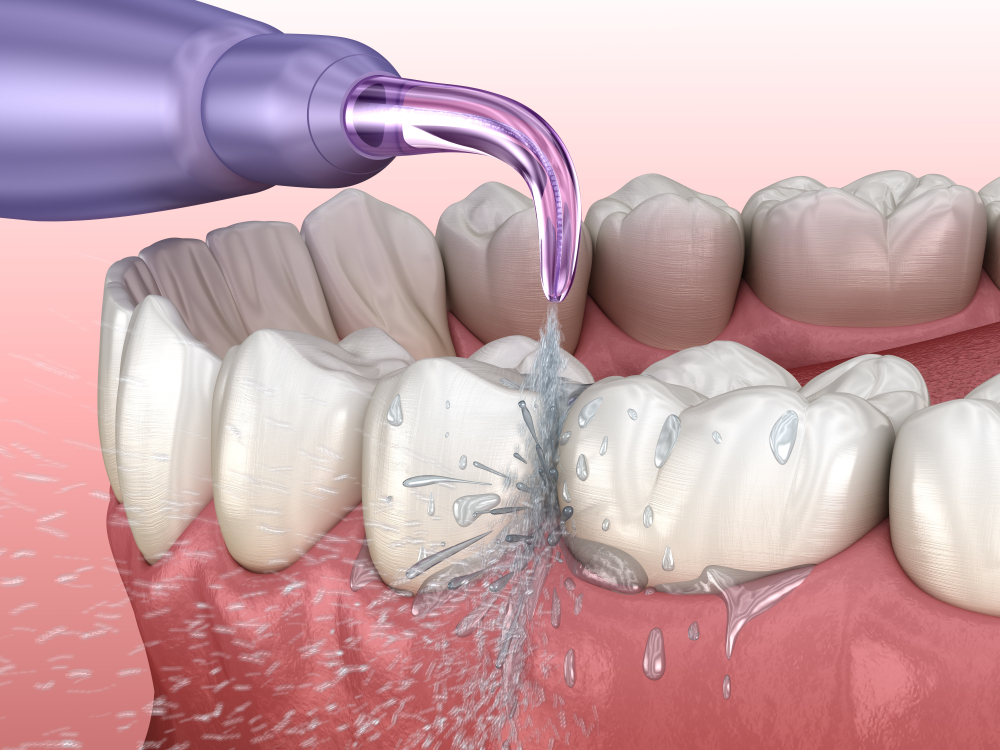 Options for cleaning around implants include:
- Standard floss or unwaxed dental tape: Works well for most implant setups
- Floss threaders or implant-specific floss: Helpful for getting under implant bridges or fixed prosthetics
- Water flossers: An excellent choice for patients with dexterity challenges or implant-supported dentures; use a low-pressure setting to avoid irritating gum tissue
- Interdental brushes: Small cone-shaped brushes that clean between the implant and adjacent teeth, especially useful around bridges
Use an Antibacterial Mouthwash
Rinsing with an alcohol-free antibacterial mouthwash once daily helps reduce the bacterial load in the mouth and supports gum health around the implant site. Alcohol-based rinses can dry out oral tissue, so choose an alcohol-free formula.
 Attend Regular Dental Checkups
Twice-yearly visits to Lexington Dental of Owasso are a non-negotiable part of implant maintenance. At each dental checkup, Dr. Cary examines the implant for any signs of stress, wear, or early infection. Our hygienists remove tartar buildup around the implant base and crown margins, which brushing and flossing alone can’t address. These visits are also where small problems get caught before they become expensive ones.
Protect Your Implants from Excessive Force
Implants are strong, but they’re not indestructible. Chewing ice, biting into hard candies, or using your teeth to open packaging places extreme force on the crown and the abutment beneath it. If you grind your teeth at night, a custom nightguard from our Owasso office is a simple, protective solution. Bruxism places substantial cyclical stress on implants during sleep, which can loosen the abutment screw or damage the crown over time.
Skipping maintenance doesn’t just risk the implant. It puts your surrounding natural teeth and gum tissue at risk too. The most common issues that develop from inadequate implant care include:
Peri-implant Mucositis
This is early-stage inflammation of the gum tissue around the implant, similar to gingivitis. It causes redness, swelling, and bleeding when you brush or floss near the implant site. The good news: caught early, it’s reversible with improved oral hygiene and a professional cleaning. Left alone, it advances to the next stage.
 Peri-implantitis
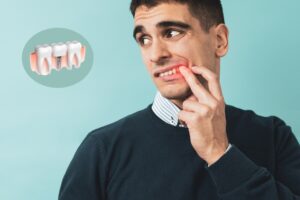
Peri-implantitis is a more serious infection affecting both the gum tissue and the underlying bone. Symptoms include deepening pockets around the implant, bone loss visible on X-rays, and, in some cases, implant mobility. Treatment may involve antibiotics, deep cleaning, laser therapy, or surgical intervention, depending on severity. This is the complication implant patients most need to avoid, and consistent home care and professional maintenance are what prevent it.
Loose or Broken Restorations
The crown, dental bridge, or denture attached to your implant can loosen or fracture with time, particularly if you clench or grind. If your restoration feels different or makes a clicking sound, contact our Owasso office right away. Most of these issues are straightforward to repair when addressed early.
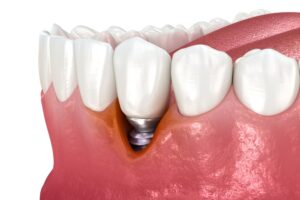 Gum Recession Around the Implant
If gum tissue recedes around the implant post, the metal may become visible at the gum line. Beyond aesthetics, exposed metal increases infection risk. Depending on the extent of recession, Dr. Cary may recommend a soft tissue graft to restore coverage.